WOUND | FERITA
At Palazzo Callas Exhibitions, the exhibition featuring the shots, emotions, and winners of the 2025 Sirmione Award for Photography
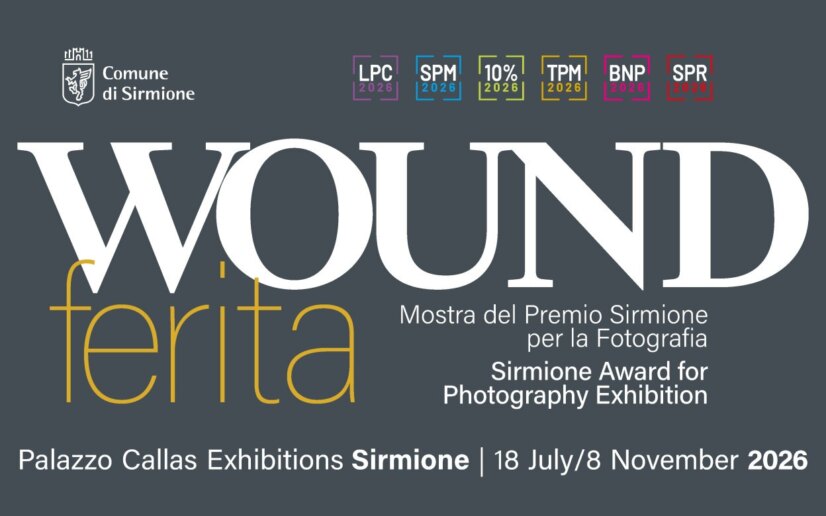
WOUND | FERITA
Exhibition of the 2025 Sirmione Photo Award
Palazzo Callas Exhibitions
18 July – 8 November 2026
A photographic exhibition that combines powerful imagery with reflection, inviting visitors to question the relationship between humanity and nature, and to consider our shared responsibility toward the landscape.
Featuring photographs from the 16th edition of the Sirmione Photography Award, the exhibition addresses one of the most pressing issues of our time, using photography as a tool for communication and environmental awareness.
-
The Wound in the Images: Humanity, Nature, and Awareness
Human intervention leaves increasingly visible marks on the natural landscape. Yet we continue, all too often, to perceive nature as pristine and untouched, overlooking the transformations—and the wounds—that shape it.
WOUND | FERITA explores this contradiction through an installation in which each photograph is paired with a second copy that has been physically torn and painstakingly reassembled. The tear symbolically represents the violation of nature, while the stitching—deliberately visible and imperfect—does not erase the damage but makes it impossible to ignore. It becomes a metaphor for humanity’s attempt to care for the landscape without concealing what has already happened.
The project forms part of the Municipality of Sirmione’s ongoing commitment to environmental and landscape themes, from the publications produced through the Sirmione Photo Residency, to the discussions hosted by the Equilibri series, the recent exhibition If Trees Could Speak featuring photographs by Magnum Photos, and numerous initiatives dedicated to the protection and enhancement of the town’s urban tree heritage.
As Luisa Lavelli, Mayor of Sirmione, explains:
“I would like to emphasize that the wounds these images reveal extend beyond the environmental and ecological sphere, reaching an existential dimension.
They resonate within each of us, reflecting the traces of a continuous process of growth, transformation and adaptation—the very marks of life itself.
The act of stitching therefore becomes a metaphor for the human capacity to repair, to endure, and to overcome adversity, transforming trauma into strength and greater awareness. With this new exhibition, we once again seek to unite the beauty of photography with its essential role as a powerful means of social communication.”
The Exhibition Design
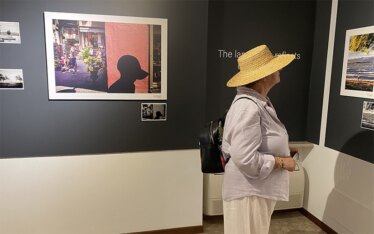
The exhibition presents a selection of photographs from the Sirmione Photo Award, each accompanied by a second black-and-white print that has been torn and reassembled, leaving the wound intentionally visible. By removing colour, these duplicate prints simplify the visual reading of the curatorial intervention, directing attention toward the act of reconstruction and the exposed scar. The original photographs remain the protagonists of the exhibition, while the accompanying copies introduce a further layer of interpretation, transforming the display into a reflection on the relationship between humanity and the landscape.
Mariangela Gavioli, curator of the exhibition, explains the concept behind the installation:
“The photographs from the Sirmione Photo Award celebrate the extraordinary beauty of the landscapes of Lake Garda and Sirmione. The exhibition design, however, seeks to explore our relationship with those landscapes and the responsibility we bear toward them.
Alongside each original photograph, a second black-and-white print is torn and carefully reassembled: the tear represents the wound, while the reconstruction represents our attempt to mend it without concealing what has happened. The stitching does not erase the wound; it ensures that it will never be forgotten.”
The installation draws inspiration from Kintsugi (金継ぎ), the ancient Japanese art of repairing broken pottery by embracing rather than hiding its fractures. Instead of concealing the breaks, Kintsugi highlights them, recognising imperfections as expressions of memory and the passage of time. Likewise, in WOUND, the act of stitching does not restore the image to its original state; instead, it makes the wound visible and invites visitors to reflect on the relationship between humanity and the landscape.
The exhibition continues the curatorial research initiated last year with FIT, an exhibition project exploring the social perception of the human body.
As Riccardo Genovesi, Councillor for Tourism, comments:
“This exhibition celebrates one of the places most beloved by photographers. We do not need to tell people how beautiful Sirmione and Lake Garda are—the photographs speak for themselves every day.
Through this exhibition, we promote the territory by using photographic art as a vehicle for environmental awareness. Here in Sirmione, photography is far more than a marketing tool; it becomes a genuine means of awakening our perception of reality, reminding us of the care these extraordinary places deserve.”
Sirmione: A Beauty That Endures
The same reflection applies to the landscape of Sirmione and Lake Garda. Every corner and every perspective possesses its own dignity and beauty, shaped by time and by the coexistence of nature and human presence, regardless of the idealised aesthetic conventions often associated with tourism.
Just as the photographs demonstrate that no landscape is free from traces of change, the lake itself teaches us that authentic beauty lies in its capacity to endure, adapt and renew itself.
At the entrance to Palazzo Callas Exhibitions, visitors are welcomed by a large introductory panel featuring a celebrated quotation by scientist and science communicator Hubert Reeves on the relationship between humanity and nature. Several words have been deliberately erased without being entirely concealed:
“Man is the most insane species.
He worships an invisible God and destroys a visible Nature.”
As with the torn and reconstructed photographs, this gesture does not erase what has happened but instead makes it visible. The act of erasure transforms an accusation into an invitation to care for—and take responsibility for—the natural landscape.
WOUND | FERITA
Exhibition of the 2025 Sirmione Photo Award
Palazzo Callas Exhibitions
18 July – 8 November 2026
Opening Hours
18 July – 27 September
- Daily: 10:30 am – 12:30 pm and 4:30 pm – 7:00 pm
- Fridays and Saturdays: 10:30 am – 12:30 pm and 4:30 pm – 10:00 pm
- Closed Mondays
29 September – 8 November
- Daily: 10:30 am – 12:30 pm and 3:00 pm – 6:00 pm
- Closed Mondays
Free admission
Number of photographs: 115
Photographers: 75, from Italy and across Europe
WOUND – Exhibition poster | Press release (in Italian only) |
The photo galleries: of the installation and the inauguration
Visitors’ comments on the exhibition