March 8th in Sirmione
From Naomi Jacob to Elsa Lizzeri: Stories of Women and Freedom in the Pages of a Library
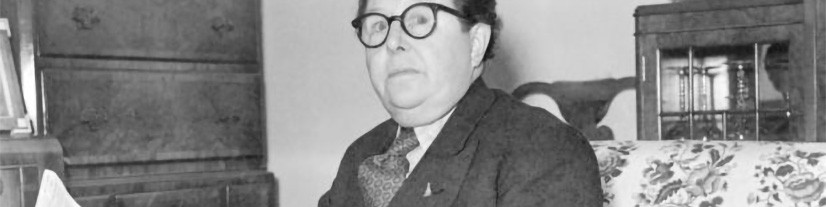
There’s a thread that connects the English suffragettes to the silent halls of a library overlooking Lake Garda. A thread made of words, study, and access to knowledge. On March 8th, in Sirmione, it also passes through here: through the story of British writer Naomi Jacob and that of Elsa Lizzeri, the woman who helped found the Sirmione Municipal Library in the 1960s.
The shelves of the “Mario Ferrari” library have attracted scholars from Harvard University searching for Ezra Pound, researchers from Turin interested in Naomi Jacob, and even the director of the children’s section of the Berlin library, interested in Central European literature. An unexpected international crossroads for a small town on Lake Garda, which has grown thanks in part to the quiet work of Elsa Lizzeri.
Eighty-nine years old, a former municipal employee born in Sirmione, Elsa still frequents the Municipal Library; a library she helped establish when it was still housed in the Scaligero Castle. “The library,” he explains, “was born when the castle’s premises were requested during the reign of Mayor Dante Bertoldi. Former Prime Minister Aldo Moro also came to Sirmione in the summers, and he was in favor of opening it.”
Professor Mario Ferrari, after whom the library has been named since 2016, was instrumental in establishing the library. He suggested requesting the volumes from the National Institute of Popular and Scholastic Libraries. In 1968, 600 books arrived, cataloged by Sandro Campanelli. The ACLI (Italian Association of Children’s Libraries) provided the volunteers, including young Elsa and teacher Ernesto Tozzo. Initially, it opened only on Sunday mornings, and when Tozzo moved to Brescia, Lizzeri was left alone. The service continued until the mid-1970s, when the state concession was not renewed.
Following Ferrari’s advice, Elsa championed the idea of a free library, without membership fees, with a focus on the children’s section and local history. The library’s locations changed—from the ACLI offices on Via Santa Maria Maggiore to Piazza Flaminia, with a kerosene stove and a Renaissance fresco uncovered during renovations, to Colombare, and then to its current location, between the Town Hall and the middle school. With the expansion of its opening hours, Elsa requested formal recognition of her role, contributed to the bylaws, and remained in service until 1989. Beginning in 1976, the library organized theater outings in Milan, Brescia, and Verona.
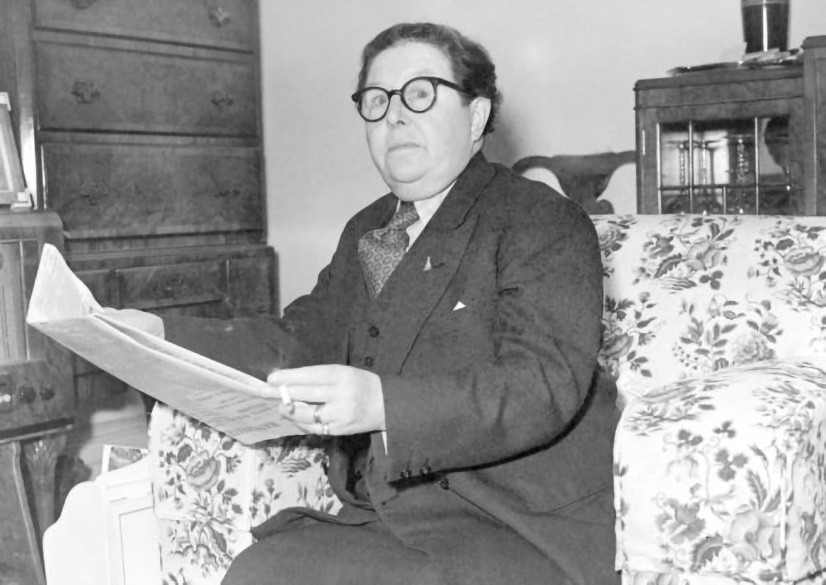
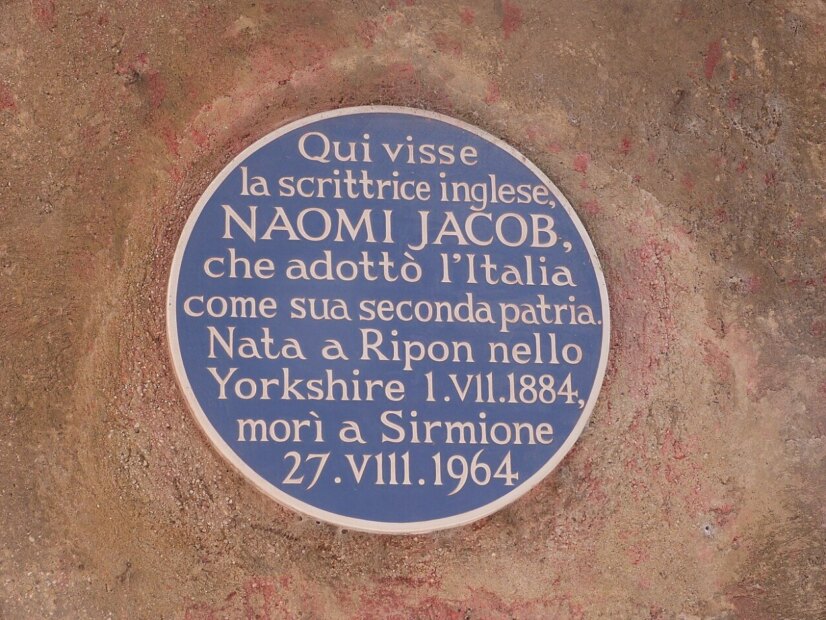
During those years, Sirmione attracted scholars interested in Naomi Jacob (1884–1964), the author of novels, autobiographies, and plays. As the Enciclopedia Bresciana recalls, she was close to progressive English circles and the fight for women’s rights; she lived between England and Europe, and also spent long periods on Lake Garda and in Sirmione, where she is now buried in the town cemetery. Her presence is also remembered by a commemorative plaque located on Via Campane, near the Church of Santa Maria della Neve, marking the place where she lived. Today, her figure continues to draw academic attention for the intertwining of literature and civic engagement.
That an English suffragette became the subject of study in a small library founded and nurtured by a woman is no coincidence. The suffragettes fought for a public voice; Elsa Lizzeri, without proclamations, created a space where that voice could be formed: books for all, education, and local memory. Even today, while Harvard preserves the letters Pound wrote from the Eden Hotel in Sirmione, the library remains a bridge between Lake Garda and the world.
In this sense, Elsa Lizzeri was also, quietly, a “guardian of rebellious women“: thanks to her work and her care of the archives, researchers have been able to reconstruct Naomi Jacob’s presence in Sirmione. And thus March 8th becomes not just a celebration, but a concrete memorial to the women who transformed culture into an act of freedom.
Marzo in dialogo con le donne: eventi, incontri e spettacoli per riflettere su diritti e parità